Detecting False Author Affiliations in Research
False author affiliations are a growing problem in academic publishing. Researchers sometimes claim ties to institutions they don’t actually have, which undermines trust, skews research metrics, and distorts institutional rankings. Between 2019 and 2023, thousands of papers were flagged for questionable affiliations, with some authors listing over 20 institutions. This issue is particularly prevalent in regions with rapidly expanding research output.
Here’s what you need to know:
- Why it happens: To boost prestige, secure funding, or manipulate rankings.
- Common tactics: Fake institutions, excessive affiliations, unauthorized co-authors, and paper mills.
- How to detect it: Verify institutional ties through directories, ORCID profiles, and email domains. Use tools like Sourcely for deeper analysis.
- What to do: Gather evidence, report findings to journals or institutions, and ensure confidentiality.
What Author Affiliations Are and Why They Matter
Defining Author Affiliations
An author affiliation refers to the institution - such as a university, research center, hospital, government agency, or private company - that backs a researcher's work. In academic writing, affiliations are usually displayed beneath the author's name. For instance, you might see something like: "Department of Biology, Massachusetts Institute of Technology, Cambridge, MA, USA".
These affiliations serve a dual purpose. First, they show where the research was conducted, providing a clear connection to the supporting institution. Second, they establish accountability, helping readers identify who is responsible for ensuring the quality of the research. By linking the work to a credible institution, affiliations help verify the legitimacy of the research.
Beyond accountability, affiliations also highlight institutional backing and quality control, which adds credibility to the work. Moreover, they can encourage collaboration by clearly identifying the researcher's organizational ties. This makes it clear why accurate affiliations are essential for maintaining the integrity of scholarly work.
Why Correct Affiliations Are Important
Accurate affiliations are more than a formality - they're a cornerstone of research integrity and trust. Properly reported affiliations ensure that credit goes to the institutions that genuinely supported the research. This acknowledgment is crucial because institutions often provide vital resources, from advanced facilities to funding and faculty salaries, all of which contribute to the success of a study.
However, errors in affiliations can have serious consequences. For example, one study revealed that 38% of affiliations from an Egyptian institute couldn't be verified. Such inaccuracies don't just impact individual researchers - they can tarnish the reputation of entire institutions.
To address this, organizations like the International Committee of Medical Journal Editors (ICMJE) have ethical guidelines requiring authors to report affiliations correctly and disclose any conflicts of interest. When affiliations are misrepresented - whether intentionally or by mistake - it can disrupt the research ecosystem. The fallout includes missed opportunities, distorted research metrics, and a loss of public trust in scientific findings. This makes tackling false affiliations a critical priority for the academic community.
Claiming institutional affiliations, COPE Forum discussion
Common Methods Used to Create False Affiliations
Accurate affiliations play a vital role in maintaining academic integrity. However, deceptive practices aimed at fabricating affiliations have become increasingly common, posing challenges for researchers and reviewers alike. These tactics not only erode trust but also highlight the need for effective detection strategies.
Types of False Affiliation Practices
One prevalent method involves creating fake institutions with names that closely resemble legitimate ones. These fabricated organizations often mimic the names of well-known universities or research centers, which can easily mislead those who fail to verify their authenticity.
Another common tactic is falsely claiming ties to prestigious institutions, such as Caltech or Cambridge University, without any formal connection. By associating their work with respected organizations, authors attempt to boost the credibility of their research.
The practice of multiaffiliation has also become a growing concern. Some researchers list an excessive number of affiliations - sometimes over 20 - without genuine involvement in those institutions. This not only skews bibliometric analyses but also misleads readers about the actual contributors to the work.
Unauthorized co-authorship is another deceptive method. In some cases, researchers add individuals as co-authors without their consent to benefit from their institutional reputation. There are also instances where entirely fictitious co-authors with fake affiliations are included.
Additionally, authorship-for-sale networks, often referred to as "paper mills", offer co-authorship positions for a fee. These networks leave identifiable patterns, such as repeated appearances of the same "author-for-sale" across different research groups. These individuals rarely collaborate with the same co-authors more than once, making this behavior detectable through co-authorship network analysis.
Why People Create False Affiliations
The motivations for fabricating affiliations often stem from the pressures of academic life. Many researchers aim to enhance the perceived prestige of their work. Associating their research with renowned institutions can improve publication chances and elevate their professional standing.
Securing research funding is another key driver. Grant applications from authors linked to prestigious institutions often receive more favorable consideration. By falsely claiming such affiliations, some researchers try to gain an advantage in the competitive funding landscape.
Avoiding ethical scrutiny is also a factor. Researchers tied to well-established institutions are subject to rigorous quality controls and ethical reviews. By creating false affiliations, some aim to sidestep these processes, reducing the likelihood of their work being critically examined.
Manipulating institutional rankings offers yet another incentive. False affiliations can inflate publication counts and distort university rankings, benefiting both the authors and, in some cases, the institutions involved. Finally, the relentless "publish or perish" culture in academia often pressures researchers to cut corners, sometimes at the expense of ethical standards.
Large-scale bibliometric analyses have shown the extent of these practices. Researchers tied to paper-mill networks were found to be associated with 37% of flagged papers involving problematic authorship or text manipulation.
How to Detect False Author Affiliations
Ensuring the credibility of an author often starts with verifying the authenticity of their claimed affiliations. Spotting false affiliations requires a careful, step-by-step approach that combines cross-referencing and a keen eye for inconsistencies. Here’s how you can identify potential red flags and dig deeper into questionable claims.
Checking Institutional Information
Start by visiting the official website of the claimed institution and looking through their faculty or staff directories. Cross-check this information with academic databases like Scopus or Web of Science. For instance, if someone claims to be affiliated with Harvard Medical School, their name should appear in Harvard’s directory and their academic profile should align with records in Scopus.
Be cautious of subtle tricks with naming conventions. Fraudulent affiliations often use names that mimic real institutions but include slight variations, such as "Stanford University Institute" instead of "Stanford University." To confirm legitimacy, tools like the U.S. Department of Education's College Navigator can help verify if the institution is accredited and officially recognized. Also, keep in mind that affiliations can change over time. If a prestigious affiliation suddenly appears without evidence of a transition or prior connection, it’s worth investigating further.
Verifying Email Addresses and Contact Details
Email addresses are another valuable clue. Legitimate institutional emails typically follow a standard format unique to the organization. A red flag is when an author uses a personal email address (like Gmail, Yahoo, or Hotmail) instead of an official institutional domain. For example, if someone claiming to be from Stanford University provides "johnsmith@gmail.com" as their contact, that’s a reason to question their claim.
Pay attention to the domain name of the email address. Fraudulent emails often include slight variations from official domains, such as "@university.edu.com" instead of the proper "@stanford.edu." Institutions usually have specific naming conventions for emails, so checking the institution's website or contacting their IT department can help confirm authenticity.
A 2024 study published in Nature uncovered a network of authors who falsely claimed affiliations with prestigious universities but exclusively used personal email addresses. None of these individuals appeared in institutional directories, which turned out to be a key indicator of paper-mill activities.
Reviewing Co-Author Patterns
Another way to uncover false affiliations is by analyzing co-authorship trends. Legitimate collaborations often reflect shared research interests, geographic proximity, or professional relationships. On the other hand, suspicious patterns might include small groups of authors repeatedly publishing together across unrelated fields or institutions without clear connections.
Tools like VOSviewer can help visualize co-authorship networks and identify anomalies. For example, an unusually high frequency of co-authorship among unrelated researchers or across multiple institutions can point to fraudulent practices. Studies have shown that 37% of papers flagged by the Problematic Paper Screener for integrity issues involved authors linked to fabricated networks.
Paper-mill operations, which often sell authorship slots, leave distinct traces in co-authorship data. These networks frequently feature the same individuals appearing across different research groups, but rarely working with the same co-authors more than once. Tools like Sourcely’s advanced filters can be used to track an author’s publications across institutions and time periods, making it easier to spot inconsistencies.
When identifying potential misconduct, it’s crucial to document your findings with evidence, such as screenshots or email correspondence. This documentation can be invaluable if you need to report discrepancies to journal editors or institutional authorities. By following these steps, we can collectively uphold the integrity of scholarly research.
sbb-itb-f7d34da
Tools and Resources for Checking Affiliations
When it comes to verifying author affiliations, having the right tools can make all the difference. While detection techniques lay the groundwork, robust verification methods ensure authenticity. From trusted academic databases to AI-powered platforms, these resources simplify the process of confirming affiliations. Let’s dive into some key tools, starting with ORCID and institutional databases, and then explore how Sourcely takes verification to the next level.
Using ORCID and Institutional Databases
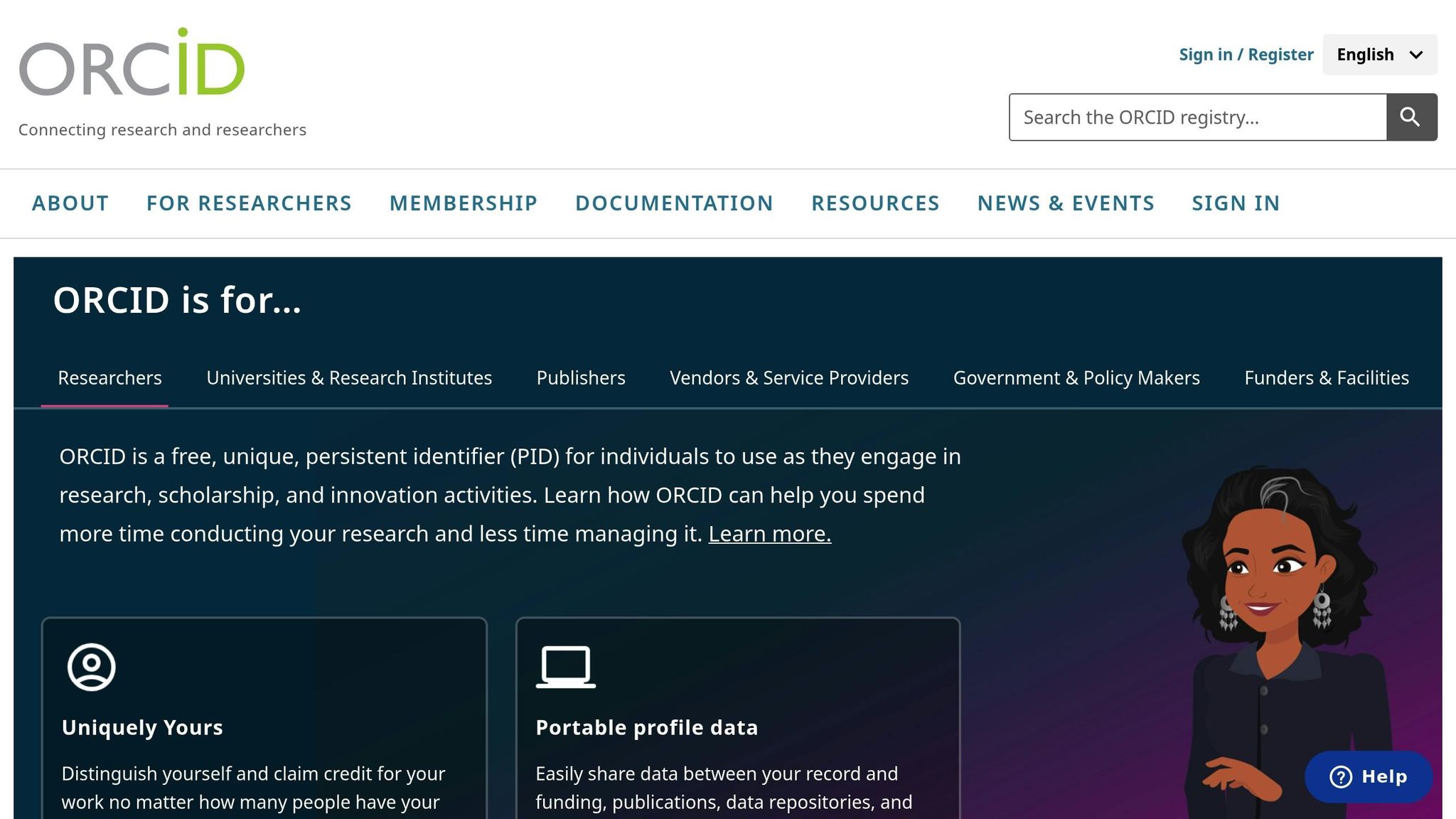
ORCID (Open Researcher and Contributor ID) acts as a digital identifier for researchers globally. Think of it as a unique fingerprint that links authors to their professional activities. By reviewing an author's ORCID profile, you can verify if their listed affiliations align with the claims in their published work.
A detailed ORCID profile should include employment history, institutional connections, and a record of publications. For instance, if an author claims to be affiliated with Harvard Medical School, but their ORCID profile lacks any mention of the institution, that’s a potential red flag. Additionally, the timeline of affiliations in the profile should logically reflect the author’s career progression.
Institutional databases are another valuable resource. University staff directories, institutional repositories, and national research council databases often list faculty members, their research work, and official contact details. These databases provide a second layer of verification, helping to confirm whether the claimed affiliation is genuine.
The effectiveness of these tools was highlighted in a 2025 study published in Quantitative Science Studies. Researchers used ORCID and institutional databases to uncover anomalies in authorship claims. They found cases where authors listed affiliations with prestigious institutions but were absent from official directories or ORCID profiles. These discrepancies were identified in over 10% of papers from certain universities, underscoring the importance of cross-referencing sources.
However, these tools aren’t without limitations. Institutional databases can become outdated if staff directories aren’t regularly updated. Similarly, ORCID profiles may lack completeness if researchers fail to maintain them. Some authors might also omit affiliations due to short-term roles or consulting positions, making the verification process more complex.
When traditional methods fall short, AI-driven platforms like Sourcely offer a more refined approach.
Using Sourcely for Affiliation Verification
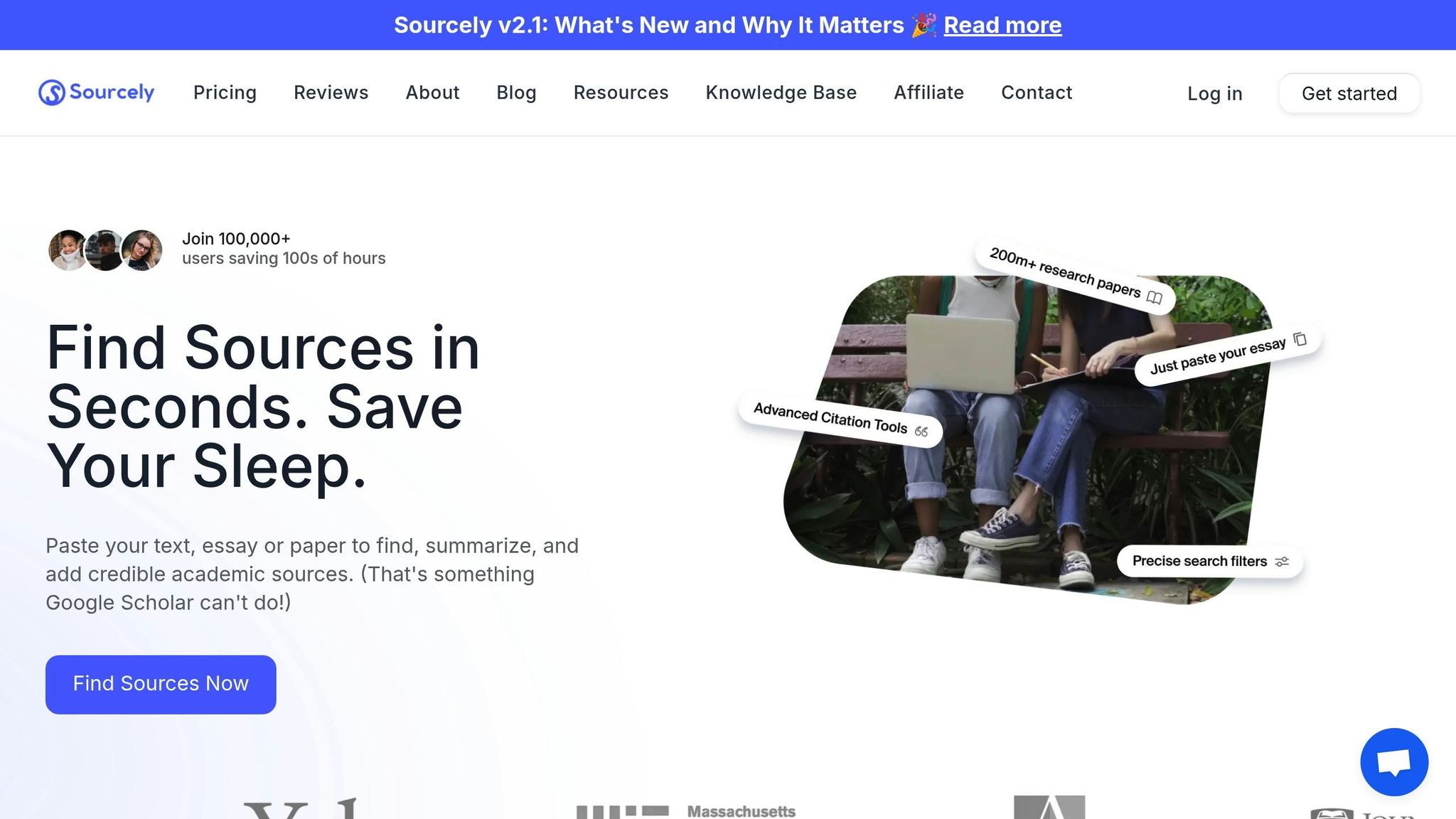
Sourcely, an AI-powered platform, takes affiliation verification to a new level with its advanced search and filtering capabilities. This tool allows users to analyze millions of academic papers and institutional records, providing a comprehensive view of an author’s publication history and affiliations.
To verify an author’s affiliation with Sourcely, you can input the paper or relevant sections into the platform. Filters for publication date, document type, and institution help narrow the search. Sourcely then generates a detailed list of sources where both the author and institution are mentioned, along with summaries and direct links to PDFs.
One standout feature is its ability to focus on an author’s name and their claimed institution. For example, if an author claims a long-term affiliation with Stanford University, Sourcely can track their publication history to ensure it reflects this connection consistently over time.
Sourcely also makes it easier to spot discrepancies. If an author’s affiliation changes between papers published around the same time, these inconsistencies become clear in the search results. Additionally, the platform’s summaries help verify whether the author’s expertise aligns with the institution they’re associated with, adding another layer of scrutiny.
What to Do When You Find False Affiliations
Once you've identified potential false affiliations, the next step is to systematically gather evidence and report the discrepancies. Taking the right approach ensures the issue is addressed properly while maintaining the integrity of academic processes.
Collecting and Recording Evidence
Start by archiving all relevant materials. Download the paper in question, take screenshots of author profiles, and document institutional listings. This creates a permanent record of the discrepancies you’ve observed.
Focus on gathering verifiable inconsistencies. For example, if you can’t confirm an affiliation through an institutional directory, log the specific databases you checked and the dates of your searches. If the author’s email address doesn’t match the format used by the claimed institution, capture screenshots of both the paper and the institution’s official email guidelines.
Keep a detailed log of every verification step. This log should include the date, the action taken (e.g., “searched Stanford faculty directory”), the outcome (e.g., “author not found”), and references to supporting files. You might also notice unusual publication patterns that don’t align with the claimed timeline. Cross-check the author’s ORCID profile against their stated affiliations, noting any gaps or inconsistencies in their employment history.
Organize your evidence in labeled folders for easy reference. Use clear file names like "Affiliation_Search_Nov21_2025.pdf" or "ORCID_Profile_Screenshot.png." This systematic approach ensures that when it’s time to report your findings, you can quickly reference specific pieces of evidence.
One notable example involved a journal using automated tools to analyze affiliations and contact emails across multiple papers. They uncovered repeated instances of fraudulent affiliations, often tied to authors who were unaware their names had been used. This thorough documentation enabled the journal to address the misconduct effectively.
Once your evidence is well-organized, you’re ready to report your findings.
How to Report Your Findings
Begin by contacting the journal editor using the official misconduct reporting forms provided on their website. Most journals have clear procedures for reporting issues like false affiliations, typically through ethics or misconduct reporting channels. Avoid informal methods, such as general contact emails, to ensure your report reaches the right people.
Before submitting your report, ensure your evidence is well-documented and your approach is concise and factual. Start with a brief summary of the suspected false affiliation and attach the supporting evidence. Stick to facts you can verify and avoid speculating about motives or passing personal judgment on the authors. Provide your contact information so the journal can follow up if needed.
The Committee on Publication Ethics (COPE) advises maintaining objectivity throughout this process. For instance, instead of writing, “The author is lying about their affiliation,” state, “The author’s claimed affiliation with Stanford University could not be verified through the institution’s faculty directory or ORCID database.”
If the journal doesn’t respond within 4–6 weeks, or if the issue could harm an institution’s reputation, consider contacting the institution directly. Reach out to their research integrity office or ethics committee, providing the same evidence you sent to the journal. Be specific - include the publication title, author names, DOI, and a clear explanation of why the affiliation appears false. Universities take these reports seriously, as false affiliations can damage their reputation and distort research metrics.
Throughout the process, maintain confidentiality. Avoid discussing your findings on social media or in public forums until formal investigations are complete. This ensures fairness for all parties and prevents interference with the investigation. It’s also crucial to verify your evidence thoroughly, as some discrepancies may have legitimate explanations, such as recent job changes, visiting researcher roles, or collaborations that aren’t easily visible in public records.
When false affiliations are confirmed, the consequences can be severe. Papers may be retracted, funding agencies might be informed, and institutions could take disciplinary action. Journals may issue corrections or expressions of concern, and organizations often review their processes to prevent similar issues in the future.
Conclusion: Maintaining Research Standards
Addressing false author affiliations requires a united effort across the research community. Fraudulent practices, like paper mills and fake institutional ties, call for strong responses from researchers, peer reviewers, and institutions alike.
Today’s advanced bibliometric tools, combined with stricter DOI and ORCID verification processes, are making it easier to identify paper-mill activities.
Researchers play a critical role by ensuring their ORCID profiles are accurate, double-checking affiliations during peer reviews, and promptly reporting any inconsistencies to journal editors. Reporting fraudulent use of names or affiliations is essential for protecting personal and institutional credibility while aiding broader detection efforts.
Institutions also bear significant responsibility. Universities and research organizations need to establish systems that flag irregularities, such as sudden surges in publications, unusually large author lists, or tightly clustered coauthorship patterns - red flags often linked to fraudulent behavior. Studies have shown how some institutional practices can distort global research metrics. By taking accountability, institutions can set the stage for adopting advanced technological tools.
Platforms like Sourcely contribute to this framework by enabling researchers to verify that the sources they cite are genuine. Using Sourcely’s filters and summaries, researchers can cross-check author affiliations against institutional databases and ORCID records, reducing the risk of citing fraudulent work or inadvertently validating false claims.
Looking ahead, integrating AI, bibliometric tools, and blockchain-based verification systems will further strengthen the fight against research fraud.
Maintaining high research standards is essential for preserving trust in science. When false affiliations go unnoticed, they encourage dishonesty and waste valuable resources. Upholding integrity is a shared responsibility that sustains reliable and credible scholarship.
FAQs
How do false author affiliations affect the credibility of academic research?
False author affiliations can seriously damage the trustworthiness of academic research. When an author misrepresents their credentials, expertise, or ties to an institution, it casts doubt on the research's integrity. This erodes confidence not just among peers and reviewers but also within the wider academic community.
To protect academic integrity, researchers and reviewers must be vigilant in spotting false affiliations. Pay attention to inconsistencies in author details, verify their claimed institutional connections, and consider leveraging tools like Sourcely to cross-check sources for accuracy. Taking these steps helps preserve the credibility and standards of scholarly work.
How can researchers and institutions prevent false author affiliations in academic papers?
Preventing false author affiliations takes a mix of careful attention, clear rules, and reliable verification steps. Researchers must present their affiliations truthfully, steering clear of any misrepresentation of their credentials or institutional connections. On the institutional side, setting clear guidelines and requiring authors to confirm their affiliations during submissions can help maintain integrity.
For reviewers and journal editors, thorough fact-checking is a must. This might mean cross-referencing author information with institutional records or official websites. Tools like Sourcely can also be valuable, helping researchers confirm credible sources and ensure accurate attribution, which minimizes errors in academic publications.
How can Sourcely help verify the accuracy of author affiliations in academic papers?
Sourcely streamlines the task of verifying author affiliations with its extensive database of reliable academic sources. Researchers can easily cross-reference details about authors and their institutional connections by utilizing advanced search filters to pinpoint relevant publications.
By focusing on credible and current sources, Sourcely helps uncover discrepancies or inaccuracies in author affiliations, providing a dependable way to uphold the integrity of research.