
Catch Fake Citations from ChatGPT and AI Hallucinations
You asked ChatGPT, Claude, or Gemini for sources. It gave you something that looks peer-reviewed. Is it? Paste it here. Sourcely runs citation verification across more than 200 million real papers and tells you what's actually there, what's invented, and what you shouldn't risk submitting.
ChatGPT Makes Up Citations That Look Real
Large language models hallucinate references. They invent plausible-sounding author names, fake journal titles, and DOIs that lead nowhere. Sourcely catches these before your paper goes anywhere near a professor.

"Give me a peer-reviewed source on how generative AI affects academic writing..."
Sure! Here's a highly cited paper you can use:
This study appeared in a well-respected neurobiology journal and provides strong empirical support for your argument.
This citation doesn't exist. It's an AI hallucination.
- Journal doesn't exist. No record of "Journal of Applied Neurobiology" in Google Scholar, CrossRef, PubMed, or Scopus.
- DOI is invalid. 10.1234/jabn.2021.0047 doesn't resolve to any registered work.
- Author and topic don't match. No Smith & Patel paper on this subject exists from 2021.
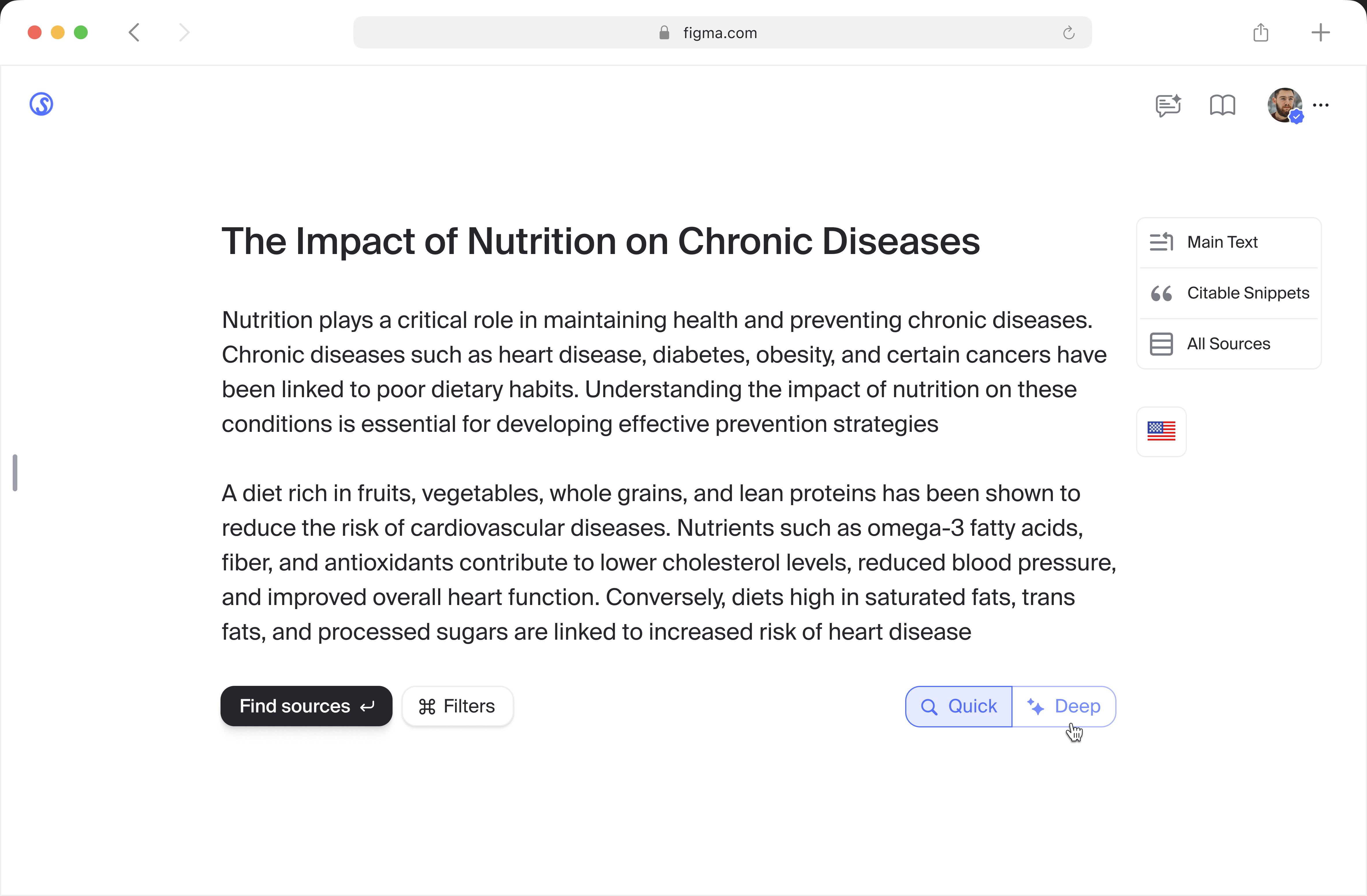
Sourcely cross-checks every citation against more than 200 million peer-reviewed papers and flags the fake ones. Hallucinated references, invalid DOIs, phantom journals. All caught before your professor sees them.
How Citation Verification Works
Paste to verdict in seconds. Here's how Sourcely separates real citations from AI-generated fakes.
Paste Your Citations
Drop in citations from ChatGPT, Claude, Gemini, your bibliography, or a paper you're reviewing. APA, MLA, Chicago, Harvard. Any format works.
AI Checks Every Reference
Each reference gets bounced off Google Scholar, Semantic Scholar, CrossRef, PubMed, arXiv, Scopus, JSTOR, and other major academic databases. Does the author actually exist? Does the journal? Does the DOI go anywhere? If any piece is off, we'll flag it.
Get Real, Fake, or Unverified Verdicts
Every citation comes back labeled with a reason. Broken DOI. Journal that was never a journal. Author who never wrote this paper. Sometimes it's all real and you can breathe easy. Sometimes it isn't.
Swap Fake Citations for Real Ones
For every fake reference, Sourcely finds a real peer-reviewed paper that backs up the same point. Formatted and ready to paste into your bibliography.
The Most Accurate Citation Checker for AI-Era Writing
Using ChatGPT, Claude, or Gemini as a research assistant? Checking a classmate's bibliography? Sourcely catches fake citations and hallucinated references before they become a problem.
AI Citation Verifier That Actually Understands Sources
This isn't just a DOI lookup. Sourcely's AI citation checker verifies that the author, journal, publication year, and paper title all point to a real publication. It catches the subtle hallucinations simpler tools miss. Works on citations from ChatGPT, Claude, Gemini, Perplexity, or whatever AI you're using.
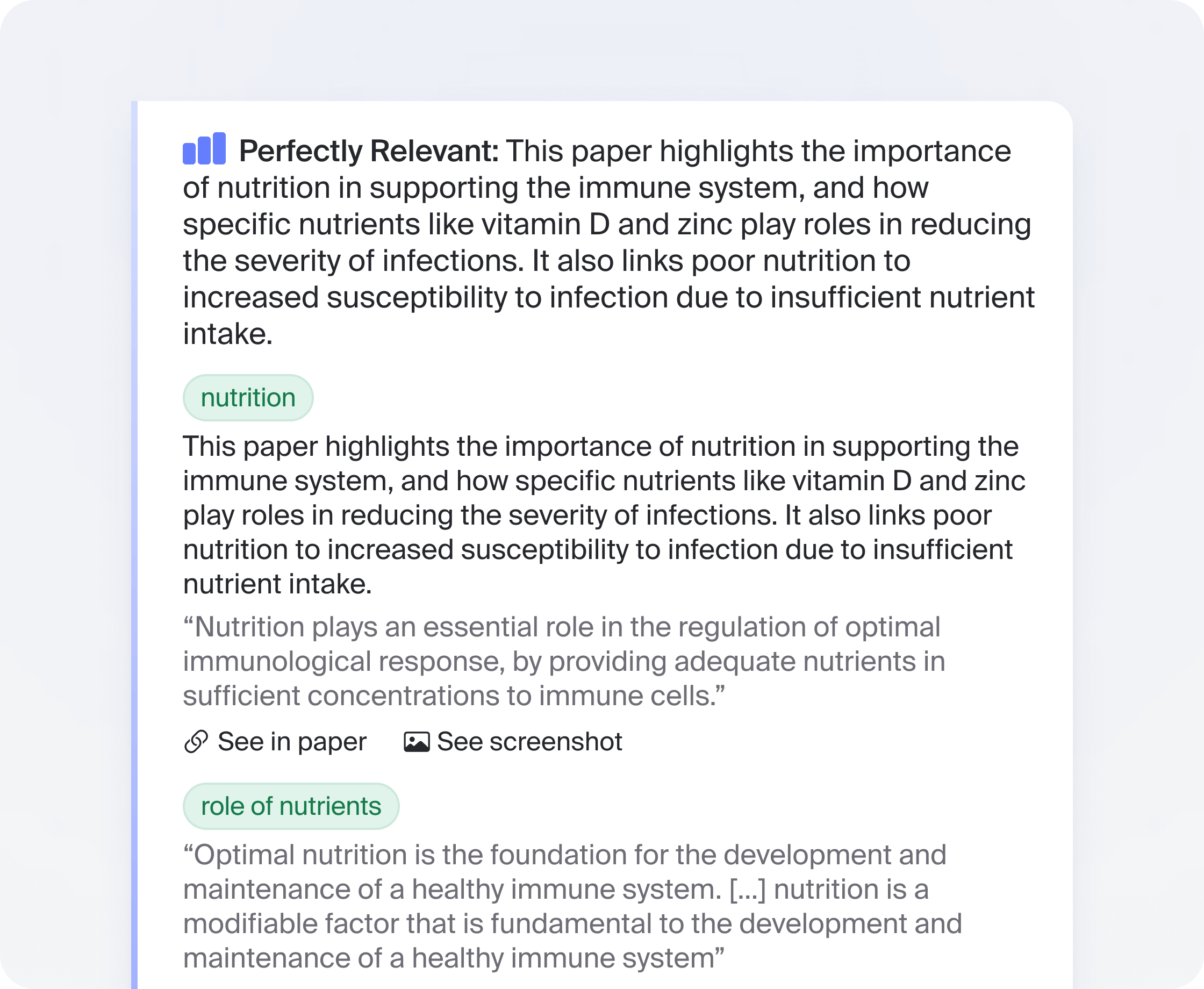
Reference Verification Against More Than 200 Million Papers
Every reference gets checked against Google Scholar, Semantic Scholar, CrossRef, PubMed, arXiv, Scopus, Web of Science, CORE, and other major academic databases. The same sources peer-reviewed journals use. If a reference isn't real, you'll know in seconds. Not after your submission comes back with a rejection.
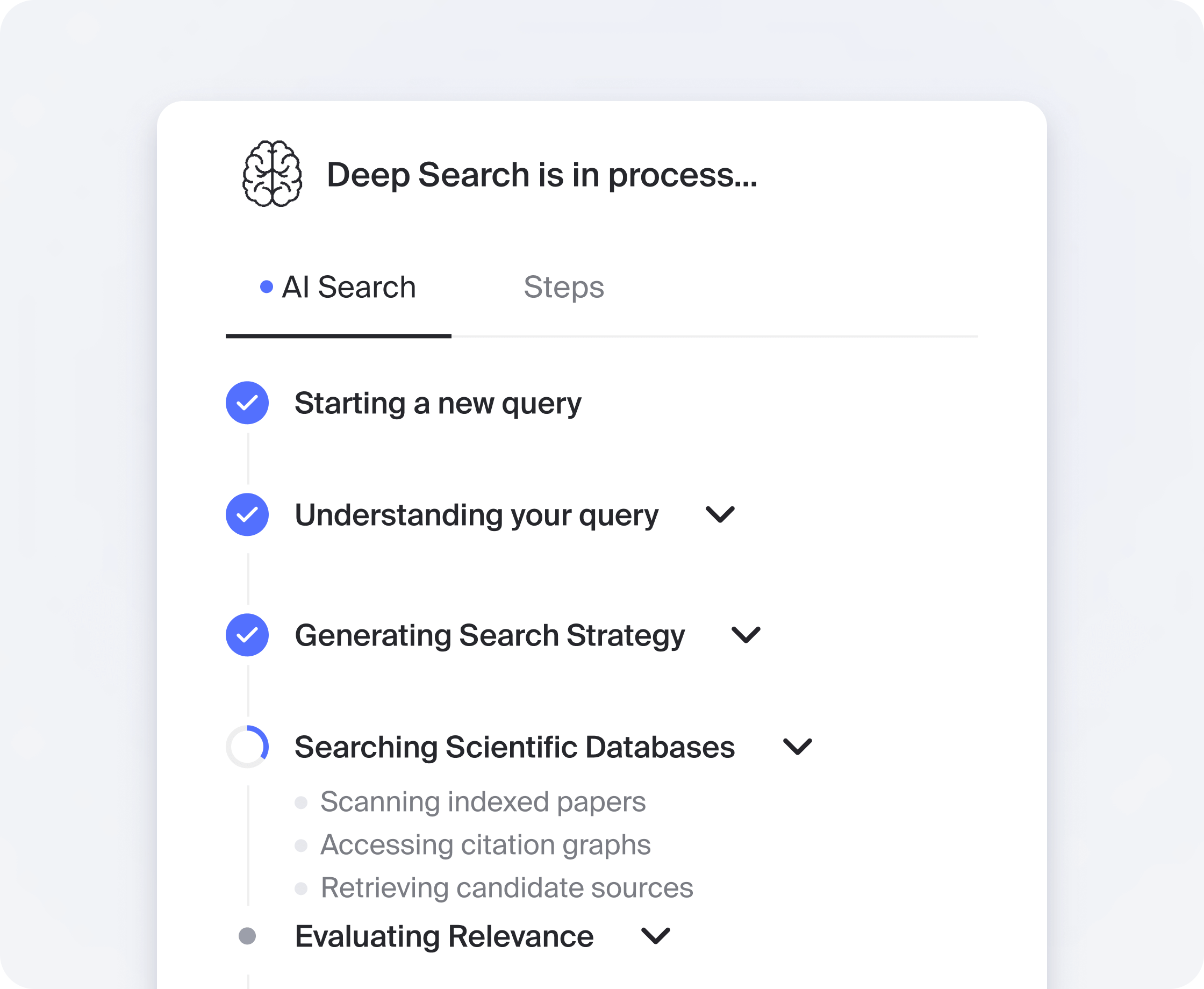
Fake Reference Detection with Clear Reasons
Every fake citation verdict comes with a specific explanation. Invalid DOI. Journal that doesn't exist. Author who never wrote on the topic. Volume number that was invented. No black boxes. You see exactly why a citation failed, so you can confidently explain it to your advisor.
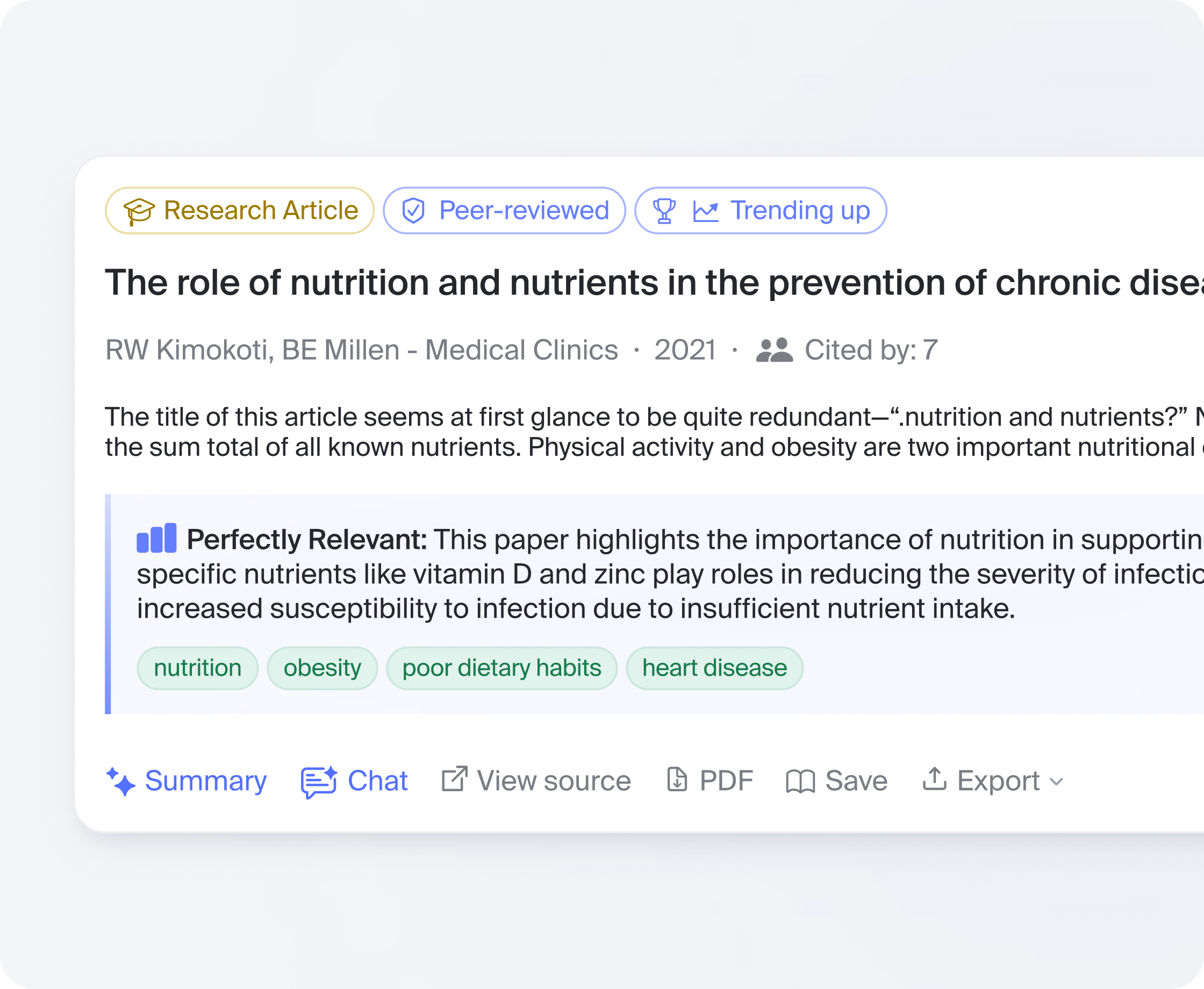
Find Real Replacements Instantly
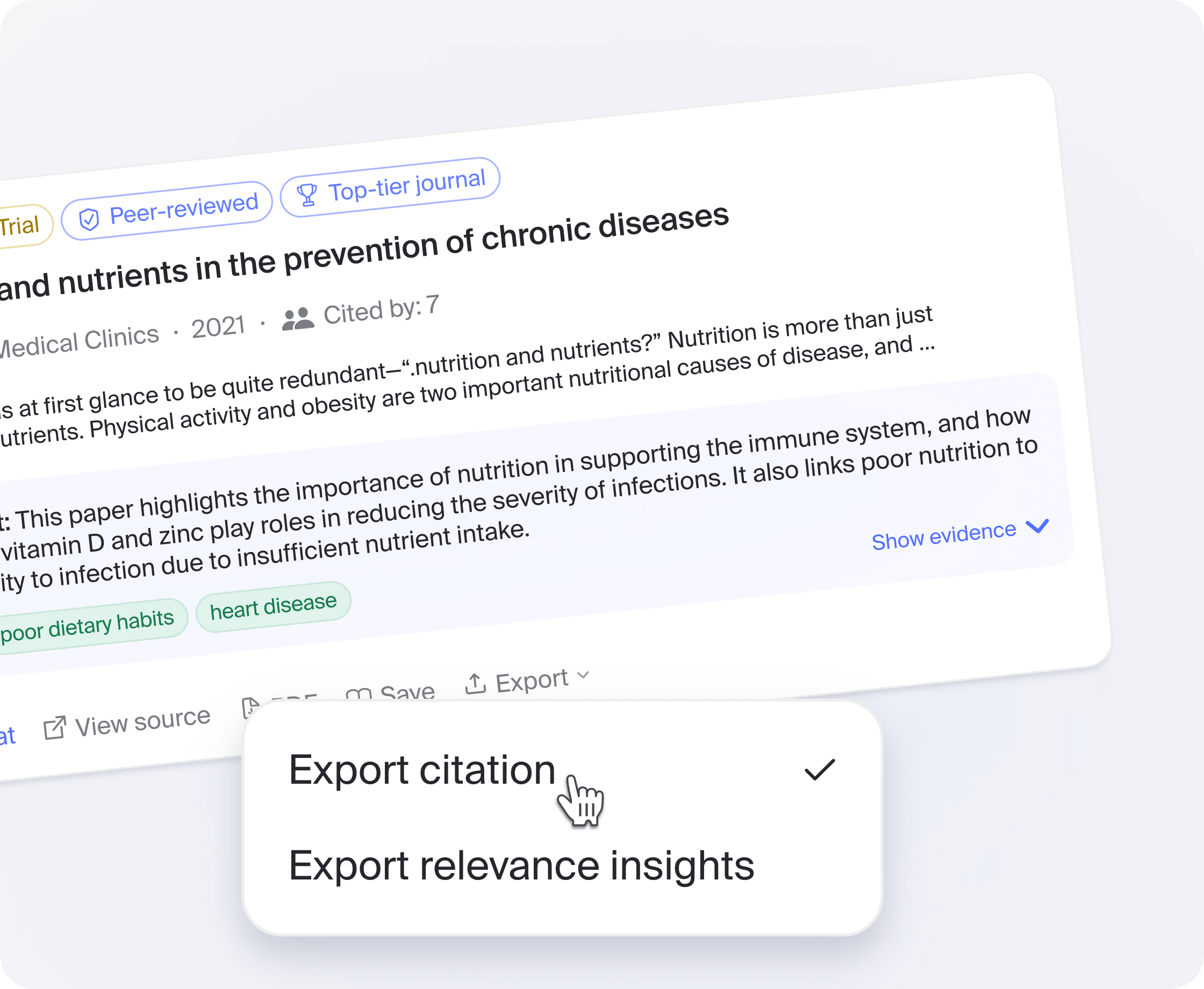
When a citation gets flagged as fake, Sourcely doesn't leave you stranded. It finds real peer-reviewed papers that actually support your claim. Formatted in APA, MLA, Chicago, or Harvard. Ready to paste straight into your paper.
Who Needs Citation Verification
If you write with AI tools, you need to verify citations. Sourcely is built for anyone who works with sources.
Students
Using ChatGPT, Claude, or Gemini to draft essays? Check every citation before you submit. Fake AI references can get you accused of academic dishonesty, and nobody wants that conversation with the dean.
Researchers and PhDs
Audit bibliographies in minutes. Yours or a co-author's. Catch fabricated references yourself before peer review catches them for you.
Editors and Journalists
Fact-check sources in submissions and AI-assisted drafts. Catch made-up studies and phantom journals before they slip into print and damage your publication's credibility.
Lawyers and Legal Writers
After Mata v. Avianca, nobody wants hallucinated cases in their briefs. Verify every citation your AI research tools hand you, before a judge does it for you.
Sourcely vs Other Citation Checkers
Most citation tools only check formatting. Very few actually verify that the source exists. Here's how Sourcely stacks up against Citesure, Scribbr, Grammarly, and ChatGPT.
| Feature | Sourcely Verify + Find | Citesure Verify only | Scribbr Formatting | Grammarly Grammar | ChatGPT AI chat |
|---|---|---|---|---|---|
| Detects AI-hallucinated citations | |||||
| Cross-checks against 200M+ papers | |||||
| Explains why a citation is fake | |||||
| Verifies DOI, journal, author match | |||||
| Suggests real replacement citations | |||||
| Finds citations from your text | |||||
| Multi-format output (APA/MLA/Chicago) | |||||
| Checks citation formatting correctness | |||||
| Free tier available |
Based on publicly available features. Sourcely is the only tool that both verifies citations and finds real replacements for the fakes.
Pricing & Plans
Choose the plan that fits your research workflow, with monthly access from $17 or annual billing from just $9 per month.
Billed annually, save 50%
Pro
Core features
10 deep searches/month
25 source credibility checks/month
Ultra
Smarter AI model for better results
30 deep searches/month
100 source credibility checks/month
 Paste your entire essay or paperNo limits on number of sourcesSummaries of each sourceSave sources to your libraryPriority supportChat with sourcesDeep searchesSource credibility checks
Frequently Asked Questions
Everything you need to know about verifying citations and catching fake AI-generated references.
Paste the citation into Sourcely's citation verifier. It checks the author, title, journal, year, and DOI against academic databases including Google Scholar, Semantic Scholar, CrossRef, PubMed, arXiv, Scopus, JSTOR, and other major publications. You'll know within seconds if the source is real, fake, or unverified, and you'll see the specific reason behind each verdict.
Citation Tools & Guides
Verify AI-generated references, check DOIs, and find real academic sources — everything you need to cite with confidence.
Find real peer-reviewed sources with citations
ChatGPT Fake CitationsWhy AI makes up references and how to fix it
AI Hallucinated CitationsWhat hallucinated references are and how to spot them
Fake DOI CheckerValidate DOIs against CrossRef instantly
Check If a Citation Is RealStep-by-step citation verification guide
AI Citation CheckerCheck citations from ChatGPT, Claude, and Gemini
Source Credibility CheckerScore any URL for research credibility
APA Citation FinderGenerate APA 7 citations from URLs, DOIs, and titles
MLA Citation FinderGenerate MLA 9 Works Cited entries instantly
Chicago Citation FinderChicago 17 citations in Notes-Bib or Author-Date
DOI CheckerValidate DOIs against CrossRef instantly
Research Paper SummarizerSummarize papers from URL, DOI, or abstract
Sourcely Research Tools
Find papers, search deeply, verify citations, and accelerate your research workflow — all in one platform.
Check out our other products

Don't stress about deadlines. Write better with Yomu and simplify your academic life.


Keep your writing voice while AI improves clarity & grammar

Welcome to Sourcely! Our AI-powered source finding tool is built by students for students, allowing us to truly understand the needs of the academic community. This student perspective keeps us up-to-date with the latest research and trends, while our collaborative approach ensures that Sourcely is continually improving and evolving.


© 2026 Sourcely