You have an essay due in 48 hours and your bibliography is empty. You know you need peer-reviewed sources, but every search returns either paywalled papers, irrelevant results, or blog posts that your professor will reject.
Finding research papers fast does not mean cutting corners on quality. It means using the right tools and a focused search strategy.
The Fastest Way to Find Research Papers
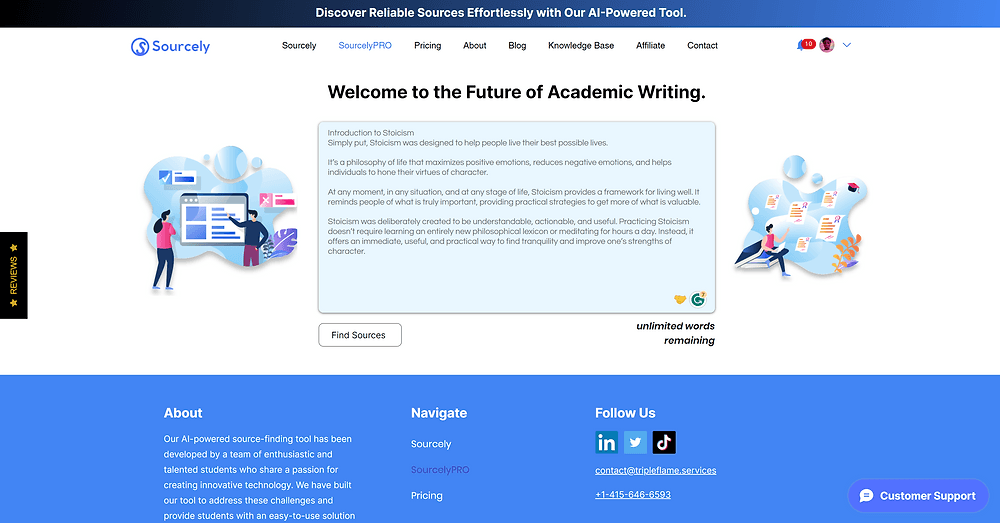
The single fastest approach: paste your essay topic or a paragraph from your draft into Find Research Papers. Sourcely's AI analyzes your text, identifies the claims you need to support, and returns relevant peer-reviewed papers with citations ready to use.
This works because the tool searches by meaning, not just keywords. Instead of guessing search terms, you describe what you are writing about and let the AI match sources to your actual argument.
For more comprehensive searches, especially literature reviews, upgrade to Deep Search, which ranks results by relevance and explains why each paper matters.
Five-Minute Paper Search Workflow
1. Write your thesis in one sentence
Before searching, articulate your main argument. Example: "Remote work increases employee productivity for knowledge workers but decreases collaboration in creative teams."
2. Paste into Find Research Papers
Go to Find Research Papers and paste your thesis or a supporting paragraph. The AI returns papers ranked by relevance to your specific claim.
3. Scan the top 5 results
Read the relevance summaries. Pick 3–5 papers that directly support your argument. Ignore tangentially related results.
4. Export citations
Copy the formatted citations in your required style (APA, MLA, Chicago). Add them to your bibliography immediately so you do not lose track.
5. Verify before submitting
If any references came from AI suggestions, run them through citation verification to confirm they are real. Fake AI citations are common and professors catch them.
Where to Search When You Have More Time
| Source | Best for | Speed |
|---|---|---|
| Find Research Papers | Essay sources by topic | Minutes |
| Deep Search | Literature reviews, comprehensive coverage | 15–30 min |
| Google Scholar | Known authors, citation tracking | Variable |
| Your university library | Course-specific databases | 30+ min |
| AI Research Assistant | Full workflow from search to citation | Ongoing |
Common Mistakes That Slow You Down
Searching too broadly. "Climate change" returns millions of results. "Impact of rising sea levels on coastal agriculture in Southeast Asia" returns useful ones.
Stopping at the first page. The best source for your specific argument is often not the most cited paper in the field. AI search tools surface niche papers that keyword search buries.
Using non-academic sources. Wikipedia, news articles, and blogs do not count as peer-reviewed sources for most assignments. Stick to journal articles, conference papers, and academic books.
Trusting AI-generated citations without checking. If ChatGPT gave you references, verify every one. Up to 60% may be fabricated.
Forgetting to save citations as you go. Export and save citations immediately. Re-finding a paper you saw earlier wastes time.
Finding Papers for Specific Essay Types
Argumentative essays: Search for papers that present evidence on both sides of your claim. You need sources that support your thesis and ideally one that presents a counterargument you can refute.
Analytical essays: Look for primary research studies with data, not just review articles. Deep Search filters by source type to help you find original studies.
Compare-and-contrast essays: Run separate searches for each topic or approach you are comparing. Find Research Papers works well for focused queries on each side.
Research papers with literature reviews: Use Deep Search for comprehensive coverage. A literature review needs breadth that quick search cannot provide.
Speed Without Sacrificing Quality
Fast research is not lazy research. The difference is tooling:
- AI search finds relevant papers in seconds instead of hours
- Relevance scoring tells you which papers to read first
- Built-in citation formatting eliminates manual bibliography work
- Verification tools catch fake references before your professor does
Start with Find Research Papers for your next essay. Paste your topic, pick your sources, export your citations, and get back to writing.