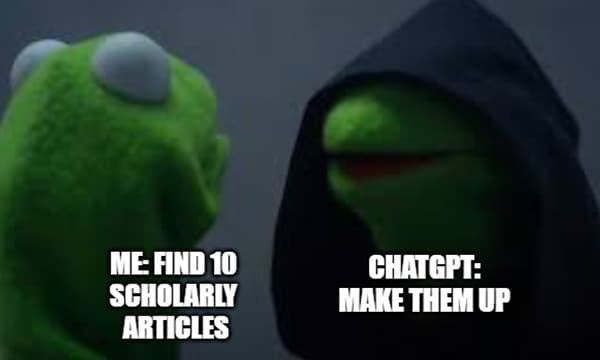
Your bibliography is the foundation of your paper's credibility. Every claim you make rests on the sources you cite. But what if those sources do not exist?
With AI writing tools generating references at scale, the question "is this citation real?" is more important than ever. This guide gives you both manual verification techniques and automated tools to check every reference before you submit.
Why Citation Verification Matters
A fake citation is worse than a missing one. A missing citation leaves a gap your professor might question. A fake citation suggests you either fabricated your research or were careless enough not to check.
Common sources of unreliable citations:
- AI-generated references from ChatGPT, Claude, or Gemini (40–60% fabrication rate)
- Secondhand citations passed from classmates or study groups without verification
- Outdated library guides with retracted or corrected papers
- Citation generators that misparse input and produce plausible but wrong output
Whether the error was intentional or not, you are accountable for every entry in your bibliography.
Manual Method: How to Check If a Citation Is Real
Check 1: Search the title
Copy the exact paper title into Google Scholar. A peer-reviewed paper on a mainstream academic topic should appear. If the title returns zero results, be very skeptical.
Check 2: Verify the author
Search the author's name with a keyword from the title. Confirm they published on this topic. AI often pairs real author names with papers they never wrote.
Check 3: Confirm the journal exists
Search the journal title. Check whether it is indexed in Scopus, Web of Science, DOAJ, or PubMed. Invented journal names are a hallmark of AI hallucinated citations.
Check 4: Resolve the DOI
If a DOI is provided, paste it into doi.org. No resolution means the identifier is fake. Use a dedicated fake DOI checker for faster results.
Check 5: Check publication year and volume
Even real journals have specific volume ranges. A volume number that does not exist for that journal in that year is a red flag.
Manual verification works but takes five to ten minutes per citation. For a bibliography of twenty references, that is hours of work.
Automated Method: Verify Citations in Seconds
Paste any citation into Sourcely's citation verifier and get an instant verdict:
- Real — the citation matches a published work in academic databases
- Fake — the citation could not be verified; specific reasons provided
- Unverified — insufficient data to confirm; manual follow-up recommended
The verifier checks author, title, journal, year, and DOI against CrossRef, Google Scholar, Semantic Scholar, PubMed, arXiv, Scopus, JSTOR, and other indexes — over 200 million papers total.
It accepts any citation format: APA, MLA, Chicago, Harvard, IEEE, Vancouver, and more. No reformatting required.
For a step-by-step walkthrough, visit our dedicated page on how to check if a citation is real.
Signs a Citation Is Fake
| Red flag | What it means |
|---|---|
| Zero search results for the exact title | Paper likely does not exist |
| DOI does not resolve | Identifier was invented |
| Journal has no website or indexing | Phantom journal |
| Author exists but not on this topic | Misattributed or hallucinated |
| Citation is "too perfect" for your exact thesis | AI optimized for plausibility |
| Multiple citations with similar formatting quirks | Batch AI generation |
Trust your instincts. If a citation feels too convenient — perfectly supporting your argument with no nuance — verify it.
Citations from AI Tools Need Extra Scrutiny
If any reference in your bibliography came from ChatGPT, Claude, Gemini, or Perplexity, verify all of them. Not just the suspicious ones.
AI models generate citations by predicting text patterns, not by searching databases. The result is references that read flawlessly and fail verification consistently.
Read our dedicated guides:
What About Website and Online Sources?
Formatted journal citations are not the only sources that need checking. If you are citing a website, blog, or online article, evaluate its credibility separately.
Use the source credibility checker to paste any URL and get a 0–10 trustworthiness score with red flags and positive indicators. For a deeper guide, see our article on source credibility you can trust.
Citation verification and source credibility checking are complementary:
- Citation verification confirms a formatted reference points to a real paper
- Credibility checking evaluates whether a URL is trustworthy for research
What to Do When a Citation Fails Verification
Do not include it. A verified-fake citation removed from your bibliography is always better than one your professor discovers.
Find a replacement. If you still need a source on that topic, use a citation and reference finder. Paste your paragraph or research question and get real peer-reviewed papers with properly formatted citations.
Check the rest of your bibliography. One fake citation often indicates others from the same source are suspect. Verify everything, not just the entry you caught.
Document your process. If working on a group project, share verification results with teammates so no one submits unchecked references.
Building Verification Into Your Writing Process
The most reliable approach treats citation checking like spell-checking — a standard final step:
- Write your paper with draft references
- Verify each citation with an automated checker
- Replace any flagged entries with real sources
- Evaluate online sources with the credibility checker
- Submit knowing every reference is defensible
This workflow takes minutes for a typical undergraduate paper. The alternative — explaining fake citations to a professor or integrity committee — takes much longer.
Quick Reference: Verification Tools
| Need | Tool |
|---|---|
| Check if a citation is real | Citation Verification |
| Validate a DOI | Fake DOI Checker |
| Verify AI-generated references | AI Citation Checker |
| Find real replacement sources | Citation & Reference Finder |
| Evaluate a website's credibility | Source Credibility Checker |
| Understand ChatGPT fake citations | ChatGPT Fake Citations Guide |
The Bottom Line
Telling if a citation is real is not guesswork. Academic databases exist precisely for this purpose. Manual checks work for one or two references. Automated tools scale to your entire bibliography.
Every citation you submit is your responsibility — regardless of where you found it. Verify first. Submit second.